Hey all,
Please please please take a moment to stop what you are doing and read the PDF I posted on Dropbox titled 'Fluid Architecture'.
I've stumbled across a concept that I am extremely excited about, and hopefully it will capture you as it has me.
Forgive the simply graphics, at this point I am conveying an idea I have spent a lot of time on.
Seriously read it, watch the video links, and respond! It would be great to get serious feedback and for you all to consider it as an umbrella concept that each of our design teams can approach.
I believe my concept of 'Fluid Architecture' has excellent potential for our site, and significant implications for how we perceive architecture in practice.
Thanks! Look forward to hearing criticism/cynicism/excitement
Wednesday, March 28, 2012

Tuesday, March 27, 2012
TED Talks
in the process of looking at precedents i came across TED talks, essentially a platform for people on the leading edge of a variety of fields to speak about new ideas. Really awesome stuff so check it. This link is design related
outhttp://www.ted.com/themes/design_like_you_give_a_damn.html
outhttp://www.ted.com/themes/design_like_you_give_a_damn.html
Monday, March 26, 2012
FOR NEXT WEEK
- new diagram / updates to show
- 2 sentence clarification of concept (raison d’etre)
- 3 iterations of building design [site plan, program relationships, form]
- site plan
- section(s)
- 3d models
- 2-3 precedents compiled and presented [show what matters]
- (if you already have them, keep working!)
Friday, March 23, 2012
Boston Analysis Coordination
Hey everyone,
I'm working to organize all of the information for the Boston Analysis.
WOW...is it overwhelming how much we now know about Boston. I am still missing the ai files for the Educational Analysis. Also, I am having some problems with links because people are using specific links (Tess you used a lot for your key and such), and I need those as well. If people could please send them to me, or if there is a lot I could bring my external hard drive to school one day this weekend and we can meet up/exchange some info quickly it would be super helpful. And if you worked in CAD first and then made PDF's send me those as well, but as 2009 or earlier versions because I don't have the newest versions of CAD on my home computer.
I'm am so blown away by the shear volume of information we have!!!
Thanks everyone! Hope everyone had a great Spring "Break"...whatever that means!! :)
Christine
I'm working to organize all of the information for the Boston Analysis.
WOW...is it overwhelming how much we now know about Boston. I am still missing the ai files for the Educational Analysis. Also, I am having some problems with links because people are using specific links (Tess you used a lot for your key and such), and I need those as well. If people could please send them to me, or if there is a lot I could bring my external hard drive to school one day this weekend and we can meet up/exchange some info quickly it would be super helpful. And if you worked in CAD first and then made PDF's send me those as well, but as 2009 or earlier versions because I don't have the newest versions of CAD on my home computer.
I'm am so blown away by the shear volume of information we have!!!
Thanks everyone! Hope everyone had a great Spring "Break"...whatever that means!! :)
Christine
Thursday, March 22, 2012
Cost Estimate???
Hey Guys, Maybe something else to include w/ the final presentation if we are all still working together is an estimate including materials and man hours? I know thinking about the actual construct-ability, cost, and assembly of the school might take away from some of the creativity, but it is a integral part of construction and design, so it may be something we should keep in the back of our minds. I've been in charge of this in the past for a few firms, so i have plenty of templates we can work off of. Hope y'all are doing well and let me know what you think.
Monday, March 19, 2012
Context
Great quote on context from Bernard Tschumi. Hopefully this will get us thinking critically about our site analysis and what ideas from this analysis our architectural design can build off of.
Although architects generally make a clear distinction between what is given (context) and what is to be conceived (concept), the relationship is not so simple. Rather than a given, context is something defined by the observer, in the same way that a scientific fact is influenced by the observation of the scientist…Context is not fact; it is always a matter of interpretation.
- Bernard Tschumi
Event-Cities 3, Concept vs. Context vs. Content, 2004
Although architects generally make a clear distinction between what is given (context) and what is to be conceived (concept), the relationship is not so simple. Rather than a given, context is something defined by the observer, in the same way that a scientific fact is influenced by the observation of the scientist…Context is not fact; it is always a matter of interpretation.
- Bernard Tschumi
Event-Cities 3, Concept vs. Context vs. Content, 2004
In response to our review,
I feel that everyone has made some valid points about the Boston analysis, site
analysis, and overall direction/future of the studio. I think everyone is doing
a great job, but my biggest critique is we all underestimated the importance of
having everyone on the same page, in order to create a cohesive comprehensive
production. As far as the individual producing work, I also feel that the work needs to speak
for itself to limit the confusion levels, and to make it clear to present and
understand. If we're going to continue on the path of Total [Co]llaboration we
need to be on top of our game. Yes we did have a bit of a time crunch, but if
there was better communication among us, we would have recognized the obvious
holes in our presentation. There is no doubt that we have the knowledge regarding
site and context needed to start producing quality designs, but in future, we
need make sure we display that understanding.
Saturday, March 17, 2012
PROGRAM + SITE = AWESOME
All-
I met with one of you yesterday and it got me thinking that if I were in this studio, right now I'd be digging deep into the program:
I met with one of you yesterday and it got me thinking that if I were in this studio, right now I'd be digging deep into the program:
- Consider all the flows that the program would foster: people, materials, energy, waste. How many 2x4s come in and go out of the school? Nails? Copper tubing? Students? Sunlight? This could be a beautiful diagram.
- With that in mind, what is the program precisely? A school for a wide variety of material-based practices? A school for learning the nuts-and-bolts of contracting? Detail and ornament design? Urban Agriculture? Multiple and changing? Deciding on a focus with your partner will be key to moving forward with specificity.
- Then, what precisely will the program need spatially? How many hammers? CNC machines? Forklifts? Computers? Lockers? All of these have explicit spatial requirements and can be used to help drive form (these should also be considered in the material flows above)
- What spaces are likely the core and what are the periphery? Make some program relationship diagrams that use reasonably accurate (or at least relative) square footages.
- Think about structural systems (and by extension, material systems). Is the entire complex the same system? Are different systems employed in different areas to show occupants variation? What would those relationships be if so? To what extent is the structure pragmatic vs aspirational in its execution?
Your first iteration for next monday should really be like the 10th. But it will be the first to be drawn with precision. Plan to bring any supplementary process materials as well (sketches, 3d physical or digital models, etc). We don't just want to see finished plans at this point. And remember, design in SECTION, and include at least a bit of context in all your sections to understand the relationship between you and everything surrounding you.
Finally, I did y'all a favor yesterday and built you a 3d topography, and began the buildings. The rhino file is in the folder. Start cleaning + adding to it. You can use this model to test massing, form and specifics fairly easily. (And note that unless you're adding to the collective parts of the model, please make a copy before adding your project work). I'm happy to give a rhino tutorial some time in the next few weeks as well if desired.
Don't hesitate to email us or post pictures to the blog for feedback!
Cheers
Dan
Thursday, March 15, 2012
Barrier vs Boundary?
Dan you mentioned during the crit a difference between Barriers and Boundaries:
I understand this to mean Barriers prevent access (either physically/visually/aurally) between areas while Boundaries announce the end of one area and the beginning of another but do not necessarily prevent access.
Would you or anyone else elaborate on boundaries and borders?
I understand this to mean Barriers prevent access (either physically/visually/aurally) between areas while Boundaries announce the end of one area and the beginning of another but do not necessarily prevent access.
Would you or anyone else elaborate on boundaries and borders?
Wednesday, March 14, 2012
Review of Review
I think our review went incredibly well. I think that we got
a lot of work done in a short amount of time, but I definitely agree that cohesiveness
was missing from our presentations and that there were gaps in our work, not our own fault but just that there are 6 of us and endless amounts of information that take years of being surrounded by it to fully understand. I
think the major issue was that the Boston Analysis was unclear about its
purpose. This was mostly because of the redesign so it almost crossed into the
realm of site analysis. I think it should be made clear that this was for
defining “problem areas” to aid the selection of our site. Also, I disagreed
that we were lacking in cross referencing each other's drawings, because it did
exist in most of them. The real issue I saw with that was there was no
standardization between each diagram so it was not easy to read that cross pollination of information.
I also agree that something that should be added to
the Boston Diagrams should be a political diagram showing how power/decision
making filters down to the Roxbury/Dorchester neighborhood committees, and
where they are in relation to each other.
I was less concerned about the critique on the Site
Analysis because I think the work was really awesome, and just lacked a bit of
cohesiveness and some information which I believe is mostly due to the time
crunch and the immense amount of information there is to document and filter
through. I agree with Austin about the awesome work everyone contributed, and the value of everyone's work. I think with another stab at them the site analysis will be amazing.
For me one thing that really troubled me about the review was the there seemed to be such an emphasis on making all the drawings too much alike. I think it was amazing to see the representation of what the feeling at the site was with sounds. It wasn't something that I have ever thought about doing and I thought it really brought a richness to the information that was presented and an understanding of the people who live there that is lacking in the other drawings. I think moving forward we should attempt to gain an understanding of the people and how they really live their lives, what the culture of the area is, and what THEY care about.
In general though....we are pretty much THE BEST CLASS EVER!!!!
Awesome job everyone
Monday, March 12, 2012
Crit Response
In response to the crit:
I've never heard the word conflation so much, Koolhaas must have set a precedent. Nevertheless the term seems to fit for two reasons:
- We're agnostic: our understanding of the site hasn't conveyed a decision. We mapped history, we've mapped transportation, we've mapped landscaping, we've mapped climate conditions and we've mapped noise, we've mapped maps basically; but non of these diagrams significantly characterized our plot of land as unique. Part of the remedy is watching the republican nomination race, look at the degree to which strategies are used to convey a dialogue. We need to be just as ruthless in our decisions about what the site is.
- We're inflexible: The component remedy is that we need to utilize a wider variety of medium/styles. Personally I think switching between mediums best flushes out an idea, and that up until now we've been illustrator drones while our conceptual models were an afterthought.
That's why we come off as confused.
The beauty of this process is that we get to build, criticize and rebuild. Christine's agriculture mapping was brilliant, we should carry her motifs forward and in other forms of analysis. This should quickly evolve into understanding the process at work fueling our site: are those small community gardens actually useful? Where do the local grocers get their food? Paul's demographics nail our site to a wall, our logic of choosing a site is rooted on that demographic analysis and that board needs to be made crystal clear. Paul's history analysis attracted a lot of attention for a reason, but that detail should bee distilled. Tess did two great things: locate nearby educational facilities and give us a fantastic understanding of how to incorporate sustainable design (not technology). I think the educational diagram should evolve into a programatic approach: what are courses offered and available locally and how does our program compete? Kyle made a building height diagram that I think we need to emphasize. There definitely is a correlation between program and building height, among other things. The graphic quality of that diagram should be used by everyone going forward, best graphic design we have. Lisa I think you got shafted over the landscaping, speak up next time! You showed us where our green areas are, where our built environment is and where our toxic zones are. We should use this to figure out what we're changing (in terms of existing landscape) in and around the site, and why. My diagrams brought an experiential quality to the analysis, I think relating the phenomenological experience in and around the site is critical to developing an attitude of our design. This analysis needs to be expressed in much more clarity.
This critique has given us a great gauge of how well we understand what we're doing, I'm not sure about the rest of you but I have a much more clear view of our intent.
Tuesday, March 6, 2012
Site Model - next work session
Yesterday we made a lot of progress on the model but there is still work to be done. We should think about another time that we can all get together again and try to finish that beast.
Please post when you would be available for another work session.
Posting Photos


Dan has been kind enough to make a Picasa File Sharing Site for our Site Photos, so please post your photos to this as soon as possible!! That way, we can all reap from the benefit of each other's photos - aka, collaborate - as well as give Kyle our photos so he can put together a fantastic presentation.
Enjoy!
Monday, March 5, 2012
St. Patrick's Parish - Some Beginning Info...
Boston [Roxbury] St. Patrick [1836]
[Records after 1930 are closed to general research.]
Parish Website
This was just a quick search. Still curious to know more about the building and the history of the parish on that site...
[Records after 1930 are closed to general research.]
- Baptisms: 1836-1968
- Marriages: 1836-1955
- First Communions: 1947-1988
- Confirmations: 1871-1960
Parish Website
This was just a quick search. Still curious to know more about the building and the history of the parish on that site...
Sunday, March 4, 2012
Little Sisters of the Poor Article: October 29, 1892
Some interesting stuff, think you all should read this.
http://newspapers.bc.edu/cgi-bin/bostonsh?a=d&d=BOSTONSH18921029-01.2.3&e=-------en-20--1--txt-IN-----#
http://newspapers.bc.edu/cgi-bin/bostonsh?a=d&d=BOSTONSH18921029-01.2.3&e=-------en-20--1--txt-IN-----#
Mapping Precedents
Just wanted to let you know to check the DropBox folder "Drawing Precedents" for the two files I showed you this afternoon about mapping 'styles.' Both files (one is a PDF and the other a PowerPoint) have "Mapping_..." at the beginning of the file name. Enjoy + good luck this week!!
Site Visit?
Hey All,
My brain has stopped working and I know we're meeting at the site around 2.
It will probably take 30 mins to get there. Who am I picking up again and when?
For everyone who is coming in my car, my number is 781-439-5464
Christine
Saturday, March 3, 2012
Dudley done right
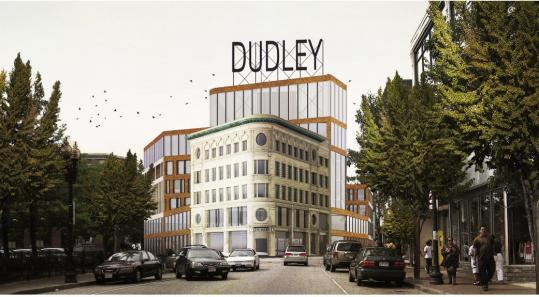
The historic Ferdinand building will anchor a $115 million office and retail complex in Dudley Square. The multitiered facility will be the new home of the Boston School Department and will include space for art exhibits and special events. Officials hope it will open in fall 2014. (Renderings/Sasaki Associates and Mecanoo Architecten)
http://www.boston.com/business/articles/2012/03/03/dudley_done_right_city_starts_work_on_major_rehab_of_long_struggling_boston_square/
Friday, March 2, 2012
The Dudley Guild
design | build | educate | collaborate | grow

MISSION STATEMENT
We believe in the cultivation of both craft and design as conduits for community building and individual growth. Products may take many forms and scales, but the development of crafts, skills and process sustains a lifetime.
We are committed to creating spaces for learning, community engagement and social entrepreneurship. We believe in a holistic approach to the development of our local community, using this future facility as a catalyst for urban change.
SITE SELECTION
In light of the Roxbury Strategic Master Plan identifying the 424 Dudley St. site for development, the newly formed Dudley Guild shall purchase this site from the Roman Catholic Archbishop of Boston for construction of new facilities. Existing structures shall be part of the purchase, and may be maintained and renovated, or removed at the discretion of the architect:
Total [re]design Studio.
SITE ASSESSMENT
In it’s planning work for 424 Dudley St., the RSMPOC has arrived at a preference for wealth generating uses that create jobs, equity, and business ownership opportunities for Roxbury residents. The site can be redeveloped to create a mixed use development including education facility(ies) as well as commercial and retail uses that provides quality opportunities to citizens of Roxbury across a variety of income ranges.
GUIDELINES FOR DESIGN
The architect shall perform site assessment to determine existing conditions, including (but not limited to): climate, circulation, landscape, infrastructure, formal history, thresholds, and pollutants.
To achieve our mission, the guild requires a new facility that contains different types of spaces for learning and skills building, acknowledging that long-term use of the facility will require flexibility, and the ability for spaces to change over time. With that in mind, current needs include spaces for various digital and mechanical technologies as well as hand-craft and construction processes ranging from small crafts up through building prototype and construction.
In addition, the guild seeks to foster gathering and community building through spaces designed for informal interaction. This should include provisions for food, public gathering and presentation space, as well as student personal storage space, material storage and administrative facilities. These elements could occur at both the scale of the school or at the scale of the neighborhood.
To foster social entrepreneurship, the guild would like to engage the street fronts of Dudley and Magazine streets. Other considerations include the need for outdoor prototyping space, productive agriculture space, truck access and parking. Additional program may be suggested by the architect for consideration by the guild.
Thursday, March 1, 2012
Scale of Drawings
Hey everyone,
I am working on the streets cad file and I realized that on our requirements outline that it says the maps for the analysis have to be 1/64th and 1/32nd scale. The cad file is already scaled to something. Does anyone know the scale factor of the drawing or is it something arbitrary?
Thanks,
Christine
Subscribe to:
Posts (Atom)